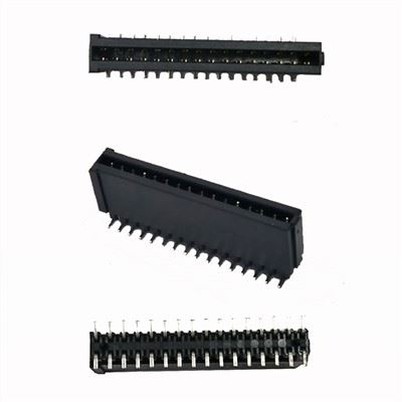

Why Choose FPC Connector
Leave a message
Imagine what would happen if there is no FPC connector? At this time, the circuits must be permanently connected with continuous conductors. For example, if an electronic device is to be connected to a power source, the two ends of the connecting wire must be firmly connected to the electronic device and the power source by some method (such as welding). As a result, it has brought a lot of inconvenience to both production and use. Take car batteries as an example. Assuming that the battery cable is fixed and welded to the battery, the automobile manufacturer increases the workload for installing the battery, increasing the production time and cost. When the battery is damaged and needs to be replaced, the car has to be sent to a repair station, the old one is stripped and welded, and then a new one is welded. This requires a lot of labor costs. With the connector, you can save a lot of trouble, buy a new battery from the store, disconnect the connector, remove the old battery, install a new battery, and reconnect the connector. This simple example illustrates the benefits of connectors. It makes the design and production process more convenient and flexible, and reduces production and maintenance costs. The benefits of using FPC connectors are as follows:
Improve the production process
The connector simplifies the assembly process of electronic products. Also simplifies the mass production process.
Easy to repair
If an electronic component fails, the failed component can be quickly replaced when the connector is installed.
Easy to upgrade
As technology advances, components can be updated when connectors are installed, and new and more complete components can be used to replace the old ones.
Improve design flexibility
The use of connectors allows engineers to have greater flexibility when designing and integrating new products and when composing systems with components.